Wandering at Home: Early Signs to Recognize and Practical Safety Strategies for Families
published: 2026-04-02
Resources
List of Services
-
Dementia Home Safety: Signs a Parent May No Longer Be Safe at Home A practical guide to recognizing when aging at home becomes unsafe. Learn how to track warning signs, distinguish normal forgetfulness from real risk, and take simple steps to protect your loved one’s safety and independence.Dementia Home Safety: Signs a Parent May No Longer Be Safe at Home
-
Dementia Home Safety Checklist: A Room-by-Room Guide for Family Caregivers A practical room-by-room dementia home safety checklist for family caregivers, with early warning signs, top hazards, quick fixes, and triage steps to help protect a loved one at home.Dementia Home Safety Checklist: A Room-by-Room Guide for Family Caregivers
-
Living Alone With Early-Stage Dementia: What Families Should Watch Closely A practical guide for families monitoring a loved one living alone with early-stage dementia, with clear signs to track, one-week spot-check methods, and next steps for protecting safety without undermining independence.Living Alone With Early-Stage Dementia: What Families Should Watch Closely
-
Wandering at Home: Early Signs to Recognize and Practical Safety Strategies for Families A practical guide for families to recognize early wandering signs at home, reduce risk with simple safety changes, and know when to seek added support before a crisis occurs.Wandering at Home: Early Signs to Recognize and Practical Safety Strategies for Families
-
Bathroom Safety Checklist for Dementia and Alzheimer’s Caregivers A practical bathroom safety guide for dementia and Alzheimer’s caregivers, with affordable fixes, warning signs to watch for, and simple upgrades that reduce fall risk while preserving dignity and independence.Bathroom Safety Checklist for Dementia and Alzheimer’s Caregivers
Wandering at Home: Early Signs to Recognize and Practical Safety Strategies for Families
One of the most common missteps families make is waiting for a “big incident” before acting. Wandering risk rarely starts that way. It begins quietly, momentary disorientation in a familiar room, pacing the hallway, trying the front door more than once, or growing restless at night. These small, persistent behaviors are easy to dismiss as ordinary forgetfulness or stress, especially when you’re juggling work, family, and caregiving. But they point to a broader, manageable continuum of risk. Addressing them early, calmly and clearly, can prevent escalation and create a safer home without upending routines or budgets.
Before They Forget was built around that idea: recognize subtle patterns, make small adjustments that matter, and act on a plan. What follows prioritizes simple environmental changes, a framework for spotting high-risk areas at home, and clear indicators for when to bring in professional help.
Start Here: Simple Steps You Can Put in Place Today
If you’re noticing the early signs, focus on practical, low-cost moves that reduce near-term risk without overwhelming daily life:
- Door and window alarms: Basic alarms provide an early alert when a door or window opens unexpectedly, an inexpensive, effective first line of awareness.
- Visual cues and reminders: Post clear, easy-to-read signs at exits; lean on color-coded indicators or simple instructions to reinforce the intended path.
- Locking strategies: Add childproof locks or other secure mechanisms to key doors. These protect against impulsive exits while preserving independence within the home.
- Routines and supervised pathways: Establish predictable, guided walks and regular, supervised visits to certain rooms or areas. Consistency helps reduce confusion and strengthens boundaries.
- Minimal-disruption adjustments: Rearrange furniture or introduce a non-intrusive visual divider to slow the pace of movement without creating distress.
These measures form the backbone of an Immediate Home Safety Action Plan, straightforward, budget-conscious, and aligned with what most families can do right now.
How the Home Itself Can Amplify Risk
Physical environments can unintentionally nudge wandering behaviors. Walk your space with a critical eye and surface the most common risk points:
- Doors and windows: Easy-to-open or frequently opened doors, and windows lacking secure locks, invite unnoticed exits.
- Direct access to car keys or vehicles: Keys left in plain sight increase the chance of an impulsive departure during moments of confusion.
- Layout and flow: Open or circular floor plans can encourage repetitive looping, increasing disorientation.
- Lighting conditions: Poor lighting, or abrupt shifts in brightness, are especially challenging in the evening and can worsen sundowning behaviors.
- Unsecured outdoor areas: Unfenced yards or gardens that connect directly to the home raise the stakes if someone steps outside unnoticed.
Mapping these points turns a vague concern into a clear checklist. Addressing them one by one both reduces immediate risk and helps you determine when more specialized interventions may be needed.
What Early Wandering Looks Like in Daily Life
The earliest signs are often subtle. Caregivers frequently report micro-behaviors that repeat over days or weeks:
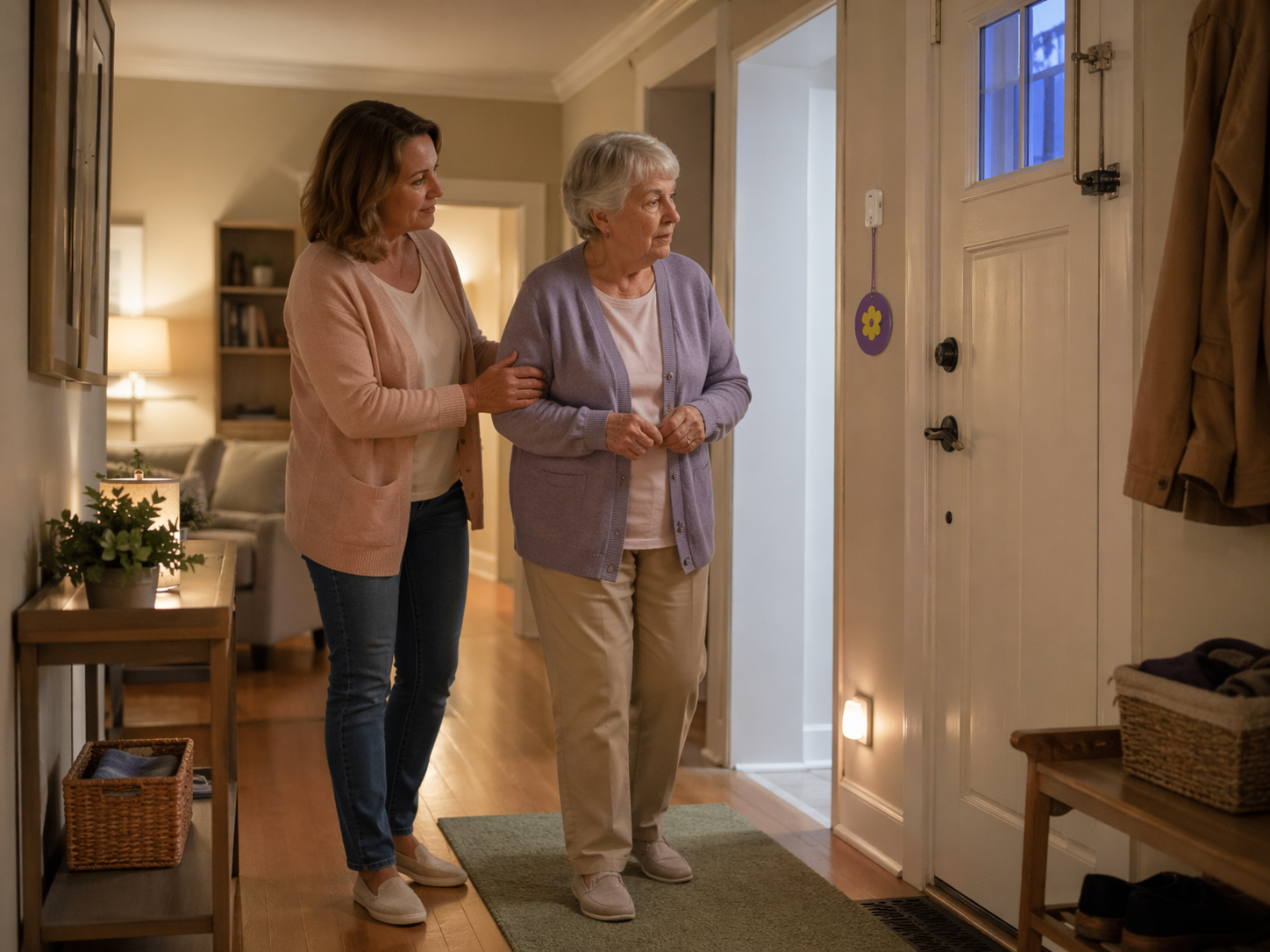
Momentary disorientation in a familiar space, pacing in the hallway, or recurring attempts to exit the home. A loved one who normally moves around with ease might pause, appear uncertain near doorways, or seem unsure which way to turn, signs of changing spatial awareness. Left unaddressed, these patterns can evolve into higher-risk episodes, including attempts to leave the house at night without supervision.
Recognizing the continuum, how small cues can grow into urgent situations, lets you act early with targeted, practical steps rather than reacting after a scare.
When to Escalate for Professional Support
Home modifications go a long way, but some patterns call for formal evaluation. Consider a professional consultation or home-safety assessment if you notice:
- Increased frequency or intensity: Disorientation or exit attempts are becoming more frequent or more severe.
- Physical changes or injuries: Falls or injuries point to underlying risks; consult a healthcare professional to evaluate possible contributors like medication changes or other medical factors.
- Sustained nighttime restlessness: Ongoing confusion or restlessness at night raises the likelihood of leaving the home unnoticed.
- Caregiver overwhelm: Feeling unsure or stretched too thin is a signal to bring in support and structure.
A formal home-safety assessment, such as the one offered by Before They Forget, includes a detailed walkthrough, a clear readiness score, and a prioritized action plan. This process helps ensure every risk point is identified and addressed, offering peace of mind and a practical roadmap during a challenging phase.
Why Acting Early Works: Evidence and Expert View
Recent research indicates that early-stage wandering behaviors are more common among people experiencing memory changes than previously assumed. That reality makes timely, home-focused action a critical safety step, not a luxury.
- Increased episodes of wandering: Industry reports suggest many caregivers see a marked uptick in disorientation and exit attempts early in memory decline, reinforcing the value of spotting subtle patterns.
- Impact of the home environment: Evaluations from senior care experts show that targeted changes, securing doors and improving lighting, for example, can reduce wandering incidents.
- Effectiveness of early interventions: Studies associate timely environmental modifications with a notable decline in wandering frequency, underscoring the importance of an Immediate Home Safety Action Plan.
From years of home-safety and senior care experience, the pattern is clear: wandering risk is a continuum, not “just forgetfulness.” Minor, recurring cues like pacing or repeated exit attempts often precede more dangerous events. Empowering families with straightforward, budget-friendly adjustments and a tailored plan consistently reduces daily stress and helps avert crises. Focus on specific risk points, implement simple measures, and turn uncertainty into a manageable, structured routine that preserves safety and independence.
Context: Why This Matters Now
Families are recognizing sooner how subtle memory changes affect daily safety, especially in homes with easy exits and ambiguous lighting. Understanding the wandering continuum isn’t theoretical; it’s a practical necessity for anyone balancing caregiving with other responsibilities. This guidance maps common home risk points and outlines cost-effective steps in line with our approach at Before They Forget: early recognition, immediate action, and steady, supportive follow-through.
Key Points to Remember
- Early signs, disorientation, pacing, repeated exit attempts, nighttime restlessness, are warning lights on a continuum, not isolated events.
- Home factors like unsecured doors and windows, open layouts that enable looping, poor lighting, especially with sundowning, visible car keys, and unfenced outdoor areas can raise risk.
- Low-cost interventions, alarms, visual cues, locking strategies, consistent routines, and minimal-disruption adjustments, create meaningful safety gains fast.
- Escalate to professional evaluation when patterns intensify, injuries occur, nighttime restlessness persists, or caregiver bandwidth is strained.
Move From Awareness to Action
Acting early reduces risk and supports independence. Download the Wandering Risk Home Checklist and complete the brief self-assessment to turn these steps into an Immediate Home Safety Action Plan. If you need more individualized help, schedule a formal home-safety assessment with Before They Forget for a readiness score and a prioritized plan tailored to your home.