Dementia Home Safety: Signs a Parent May No Longer Be Safe at Home
published: 2026-04-21
Resources
List of Services
-
Dementia Home Safety: Signs a Parent May No Longer Be Safe at Home A practical guide to recognizing when aging at home becomes unsafe. Learn how to track warning signs, distinguish normal forgetfulness from real risk, and take simple steps to protect your loved one’s safety and independence.Dementia Home Safety: Signs a Parent May No Longer Be Safe at Home
-
Dementia Home Safety Checklist: A Room-by-Room Guide for Family Caregivers A practical room-by-room dementia home safety checklist for family caregivers, with early warning signs, top hazards, quick fixes, and triage steps to help protect a loved one at home.Dementia Home Safety Checklist: A Room-by-Room Guide for Family Caregivers
-
Living Alone With Early-Stage Dementia: What Families Should Watch Closely A practical guide for families monitoring a loved one living alone with early-stage dementia, with clear signs to track, one-week spot-check methods, and next steps for protecting safety without undermining independence.Living Alone With Early-Stage Dementia: What Families Should Watch Closely
-
Wandering at Home: Early Signs to Recognize and Practical Safety Strategies for Families A practical guide for families to recognize early wandering signs at home, reduce risk with simple safety changes, and know when to seek added support before a crisis occurs.Wandering at Home: Early Signs to Recognize and Practical Safety Strategies for Families
-
Bathroom Safety Checklist for Dementia and Alzheimer’s Caregivers A practical bathroom safety guide for dementia and Alzheimer’s caregivers, with affordable fixes, warning signs to watch for, and simple upgrades that reduce fall risk while preserving dignity and independence.Bathroom Safety Checklist for Dementia and Alzheimer’s Caregivers
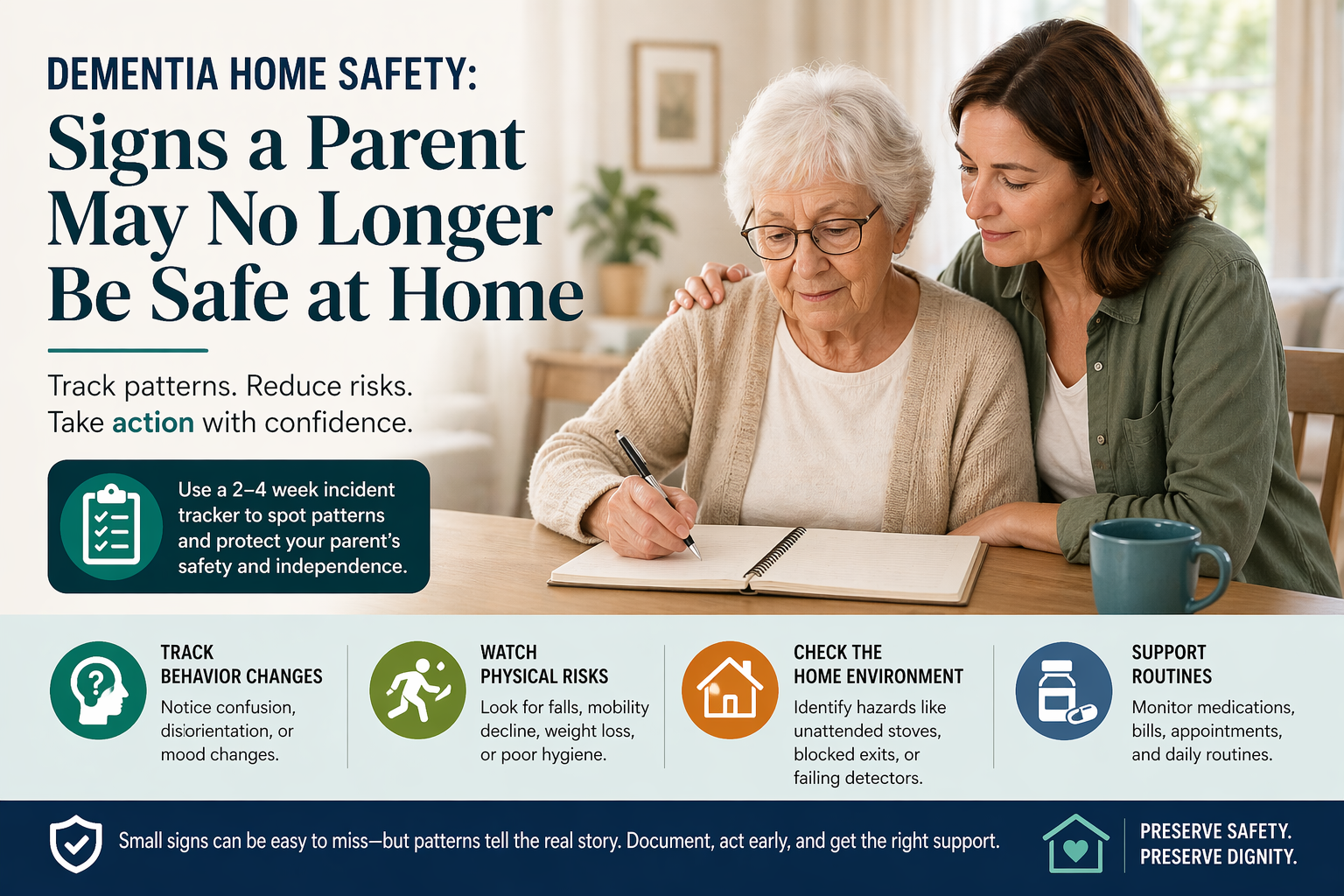
Start here, not with worry: spend the next 2–4 weeks logging what you see. Small incidents are easy to dismiss in the moment. Tracked together, they reveal patterns that distinguish normal forgetfulness from true safety risks.
Quick-Start Incident Tracker (Use for 2–4 Weeks)
Each time something happens, note the date, what occurred, and how severe it was. Organize entries under these four domains:
Behavior and Cognition
- Repeated confusion (asking the same questions, getting lost in familiar areas)
- Disorientation in time/place (mixing up day and night, struggling to locate essential items)
- Unexpected aggression or uncharacteristic irritability
- Erratic behavior (sudden mood or decision-making changes)
Physical Health and Mobility
- Frequent falls or near-misses
- Mobility decline or trouble moving safely around the home
- Unexplained weight loss or signs of dehydration
- Poor personal care or hygiene
Home Environment
- Kitchen risks (unattended stoves, misuse of appliances)
- Malfunctioning smoke or carbon monoxide detectors
- Blocked exits, cluttered hallways, or hoarding
- Maintenance issues (unaddressed electrical or plumbing concerns)
Routines and Medications
- Missed or duplicated medication doses
- Repeated bill mistakes or duplicate payments
- Declining hygiene or housekeeping
- Missed medical or other important appointments
Consistent documentation converts scattered worries into a clear snapshot of risk and points to where to act first.
How to Tell Forgetfulness from Safety-Critical Decline
Occasional lapses, like misplacing keys or repeating a story, are common with aging. Safety concerns look different. Watch for sudden, frequent disorientation, aimless wandering even after a meal, or irritability that’s out of character. When these behaviors appear repeatedly or cluster with physical changes such as falls, weight loss, dehydration, and environmental hazards like fire risks, blocked exits, or failing detectors, they indicate the brain is struggling with once-familiar routines and surroundings.
What to Watch Closely (Four Domains Explained)
1. Behavior and Cognition
Patterns of repeated confusion, losing track of time, unexpected aggression, or erratic decision-making suggest greater risk than a simple memory slip. If these show up multiple times in your tracker over a few weeks, it’s time to organize a structured home safety review.
2. Physical Health and Mobility
Recurrent falls are rarely isolated flukes; they can signal balance or coordination changes. Noticeable weight loss or dehydration may reflect forgetting to eat or drink. Declining hygiene also raises immediate safety and health concerns. The more frequently these appear, the higher the urgency for interventions like grab bars or non-slip mats.
3. Home Environment
As awareness changes, small household oversights turn serious. Unattended cooking, nonworking smoke or CO detectors, blocked exits, and unresolved maintenance issues all increase risk. A room-by-room review helps prioritize fixes, starting with fire safety and clear pathways.
4. Routines and Medications
One missed pill can happen to anyone; repeated missed or duplicated doses point to routine breakdowns that may have life-threatening implications. Likewise, recurring bill mistakes, missed appointments, and declining housekeeping signal mounting cognitive load and shrinking capacity for daily management.
What to Do Now (Low-Cost, High-Impact Fixes)
- Install simple safety tools: stove timers, motion sensors, non-slip mats, and strategically placed grab bars.
- Reduce trip hazards: clear pathways and remove clutter that blocks exits or narrows hallways.
- Support routines: use medication organizers and set automated reminders for pills, bills, and appointments.
- Check detectors: test smoke and carbon monoxide alarms and replace batteries as needed.
These basics can meaningfully reduce risk while you complete your 2–4 week log.
How to Talk with Your Parent
Approach the conversation calmly and respectfully. Share what you’ve observed using your incident notes, and frame changes as care, not criticism. Emphasize that safety steps aim to preserve independence, not take it away. Inviting their input can reduce resistance and guilt for everyone involved.
When to Loop In Professionals
- Use your tracker to spot thresholds. Patterns of falls, frequent confusion about time or place, or clusters of missed medications signal the need for a professional perspective.
- Call the primary care physician or a social worker early. They can validate concerns and suggest appropriate next steps.
- Consider a structured home safety assessment. Turning observations into prioritized actions helps determine whether risks justify community or professional intervention and which changes will help most right now.
Why Documentation Works (Data and Insights)
- Increased fall risk: Older adults with cognitive decline may be two to three times more likely to experience falls than peers without dementia, one reason to take repeated falls or near-misses seriously.
- Medication management challenges: Missed or duplicate doses are common with dementia, reinforcing the value of pill organizers and routine supports.
- Power of checklists: Simple, low-cost home safety checklists help families capture patterns and act in time, reducing emergencies linked to falls and medication errors.
Expert Perspective
Years of elder care and home assessments show a consistent truth: minor lapses can look similar at first, but paired with physical challenges and home hazards, they form a pattern that shouldn’t be ignored. A straightforward checklist gives families a quantifiable snapshot of risk and a practical roadmap for intervention. Just as important, clear guidelines ease the guilt and second-guessing so many caregivers feel, reframing concern as empathy in action.
Key Takeaways You Can Act On
- Normal forgetfulness is sporadic; safety signals repeat and cluster across behavior, physical changes, home hazards, and daily routines.
- A 2–4 week incident tracker turns anecdotal worries into trends you can act on.
- Low-cost fixes such as stove timers, motion sensors, medication organizers, grab bars, and pathway clearing provide immediate protection.
- Discuss concerns with compassion and loop in a primary care physician or social worker when patterns appear.
- A structured home safety assessment translates observations into a prioritized plan and helps decide when more support is needed.
Take the Next Step with Before They Forget
If you’re seeing patterns, repeated confusion, near-falls, missed pills, or home hazards, don’t wait for a crisis. Download our free home safety checklist to document observations and receive a personalized Home Readiness Score. The Before They Forget assessment delivers a prioritized risk snapshot, clear next steps, and a referral plan so you can act with confidence and preserve your parent’s dignity at home.