Living Alone With Early-Stage Dementia: What Families Should Watch Closely
published: 2026-04-07
Resources
List of Services
-
Dementia Home Safety: Signs a Parent May No Longer Be Safe at Home A practical guide to recognizing when aging at home becomes unsafe. Learn how to track warning signs, distinguish normal forgetfulness from real risk, and take simple steps to protect your loved one’s safety and independence.Dementia Home Safety: Signs a Parent May No Longer Be Safe at Home
-
Dementia Home Safety Checklist: A Room-by-Room Guide for Family Caregivers A practical room-by-room dementia home safety checklist for family caregivers, with early warning signs, top hazards, quick fixes, and triage steps to help protect a loved one at home.Dementia Home Safety Checklist: A Room-by-Room Guide for Family Caregivers
-
Living Alone With Early-Stage Dementia: What Families Should Watch Closely A practical guide for families monitoring a loved one living alone with early-stage dementia, with clear signs to track, one-week spot-check methods, and next steps for protecting safety without undermining independence.Living Alone With Early-Stage Dementia: What Families Should Watch Closely
-
Wandering at Home: Early Signs to Recognize and Practical Safety Strategies for Families A practical guide for families to recognize early wandering signs at home, reduce risk with simple safety changes, and know when to seek added support before a crisis occurs.Wandering at Home: Early Signs to Recognize and Practical Safety Strategies for Families
-
Bathroom Safety Checklist for Dementia and Alzheimer’s Caregivers A practical bathroom safety guide for dementia and Alzheimer’s caregivers, with affordable fixes, warning signs to watch for, and simple upgrades that reduce fall risk while preserving dignity and independence.Bathroom Safety Checklist for Dementia and Alzheimer’s Caregivers
Start with a one-week spot-check
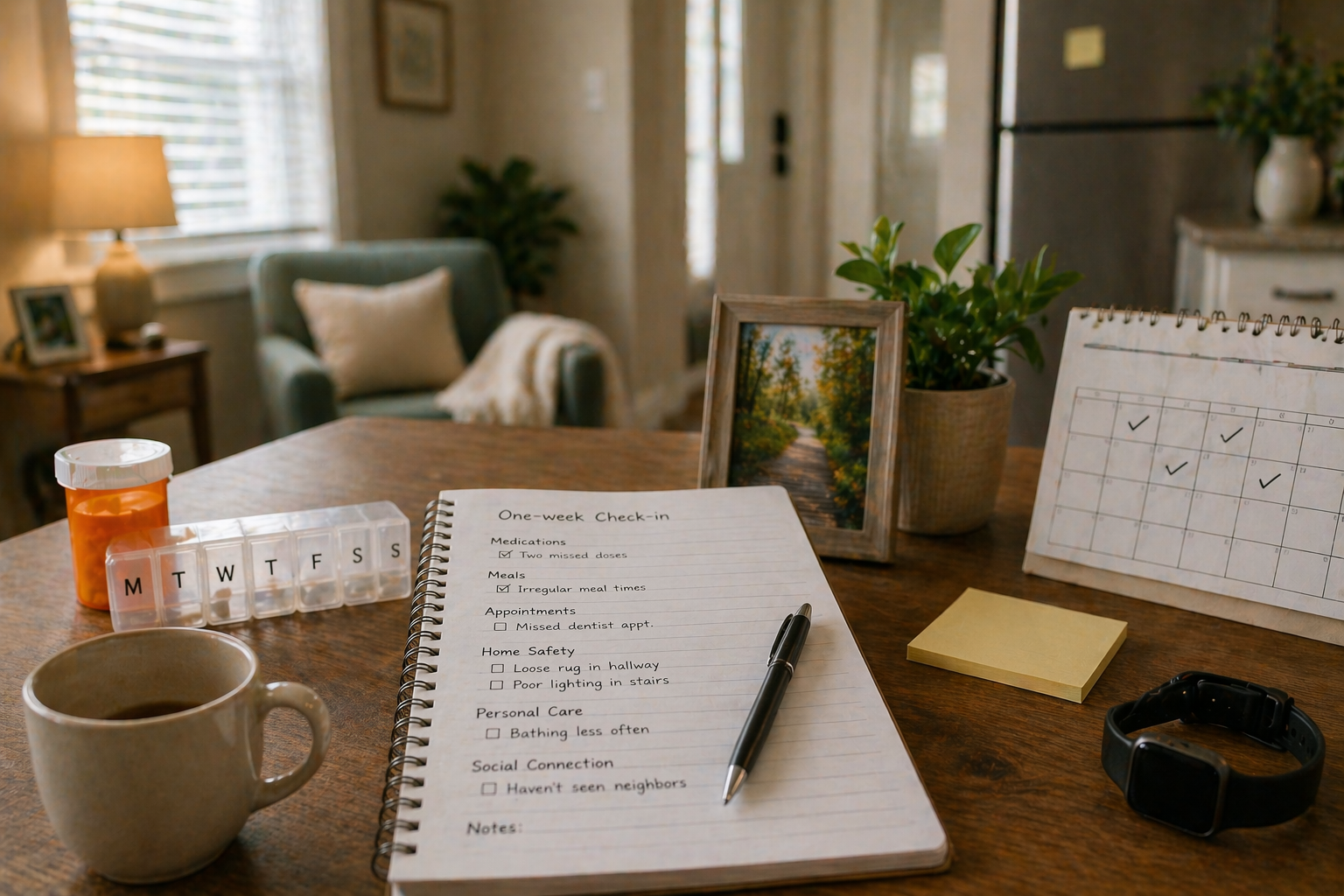
Families often wait for a crisis before stepping in. A simple, structured check can surface early risks without undermining independence:
- Log medications daily; if you note two missed doses in a week, mark it as a clear warning sign.
- Track meals and appointments; flag inconsistent meal times or any missed commitments.
- Walk through the home; note clutter, poor lighting, broken handrails, or loose carpeting.
- Use brief, regular calls to ask about meals, meds, and upcoming plans.
- Consider wearables or smart-home signals that show deviations from typical routines.
This calm, evidence-based approach respects autonomy while revealing where support may be needed.
Why This Approach Matters Now
Remote caregiving is more common than ever, and subtle changes can be easy to overlook. Focusing on observable, measurable behaviors rather than hunches reduces emotional friction and helps families make sound decisions about balancing independence and safety. Clear indicators, practical tracking methods, and non-confrontational scripts align with the goal of early-stage clarity and actionable home safety insights. As digital tools and remote monitoring play a larger role in senior care, consistently capturing small signals becomes even more relevant.
How to Capture Objective Signs and Track Trends
- Visit checklist: Bring a simple list to note meal times, medication adherence, grooming, and any safety hazards.
- Phone-call probes: Keep it light and specific. Ask about what they ate, if they took their afternoon pill, and what’s on the week’s schedule.
- Technology aids: Wearables or smart-home devices can highlight unusual inactivity or schedule deviations.
- Short time window: Record observations over the span of a week to see patterns rather than isolated slips.
Medication and Money: Early Judgment Slips to Catch Fast
Cognitive changes often show up in day-to-day decision making. Medication routines and financial tasks are two of the most sensitive indicators.
- Medication watch-fors: Missed doses; confusion with differently packaged prescriptions; inconsistent timing or dosage over a few days.
- Risk: Small lapses can escalate quickly. Even two missed doses in a week can be an early warning sign.
- Financial watch-fors: Duplicate payments, unpaid bills, or unusual transactions that wouldn’t have happened before.
- How to review: Compare current routines with previous patterns; discuss recent bills and note whether help may be needed.
Use a structured log across the week to clarify whether errors are isolated or part of a trend, and to inform decisions about seeking a professional evaluation.
Day-to-Day Routines: Small Shifts Add Up
Changes in routine can be the earliest, clearest signals that living alone is becoming harder to manage.
- Watch-fors: Missed appointments, erratic meal times, or difficulty sticking to an established daily rhythm.
- Why it matters: Routine supports safety; instability may indicate early cognitive strain.
- How to monitor: Use an observation checklist, ask brief routine-based questions during calls, and consider smart-home or wearable cues.
Tracking these indicators over time helps families objectively assess stability and decide if further evaluation is needed.
Personal Care and Nutrition: When Daily Basics Slip
Declines in personal hygiene and nutrition frequently accompany early cognitive changes and can compromise safety.
- Hygiene watch-fors: Skipped bathing or grooming; neglected dental care; increasing gaps in routines that used to be steady.
- Nutritional watch-fors: Irregular meals, reliance on unhealthy options, or reduced meal preparation.
- Why it matters: These changes can reflect broader cognitive shifts and may raise health risks.
- What to do: Document observations during visits with a checklist to build an evidence-based picture.
Social Connection and Mood: Isolation Signals Rising Risk
Social withdrawal can be both a symptom and a risk amplifier.
- Watch-fors: A sudden drop in social interactions; reduced participation in community or familiar activities.
- Why it matters: Isolation can accelerate cognitive and functional decline and reduce oversight from friends and neighbors.
- How to capture: Note contact frequency with friends, group activities missed, and changes in mood during check-ins.
Home and Mobility Safety: Hazards, Falls, and Disorientation
The home environment can either buffer or amplify risk. Look closely at upkeep, movement patterns, and orientation.
- Household hazards: Clutter buildup, malfunctioning appliances, inadequate lighting, broken handrails, or loose carpeting.
- Mobility and falls: New or frequent doctor visits for minor injuries that hint at increased fall risk.
- Wandering and disorientation: Signs of confusion in familiar spaces or difficulty navigating the home.
- Smart solutions: Home monitoring systems can flag unusual movements or prolonged inactivity in key areas.
Periodic home safety assessments address immediate hazards and support independence while reducing preventable risks.
Communicate Without Confrontation
When red flags emerge, approaching the conversation with empathy preserves dignity and opens the door to collaboration.
- Prepare: Bring objective notes from your checklists or digital data. Frame the discussion around health and safety, not limitations.
- Lead with care: Try language like, “I’ve noticed you’ve missed your usual afternoon medication, and I’m a bit concerned about your well-being.”
- Collaborate: Introduce tools such as the one-page checklist from Before They Forget to review changes together. This is about keeping independence safe.
- Next steps: Suggest an evaluation or a guided home assessment to outline necessary changes; involve trusted clinicians if indicators cross clear thresholds.
From Observations to Action: The Home Readiness Score
Pulling your notes together into a single, objective summary eases decision-making. A Home Readiness Score turns everyday observations into a prioritized, action-oriented plan, clarifying when to seek professional advice or adjust the home setup.
- Frequency of missed routine activities, such as medication doses and appointments.
- Number of safety hazards identified in the home.
- Degree of judgment inconsistencies recorded over a set period.
Systematic review across all domains moves families from vague concern to clear steps that preserve independence while centering safety.
Data and Clinician Insight
- Routine stability: Industry benchmarks show that even minor disruptions, like irregular meals or missed appointments, often coincide with early cognitive change. When two or more key activities are missed within a short period, families typically find that closer monitoring is warranted.
- Medication trends: Research indicates that subtle lapses, such as a couple of missed doses per week, can reliably flag deteriorating cognitive function. Consistent deviations in daily medication routines frequently precede more serious health concerns.
These observations transform uncertainty into action. Tracking clear indicators and evidence-backed thresholds helps families determine when to seek added support or a professional evaluation before safety is compromised.
Expert perspective
In my experience working with families navigating early-stage dementia, the most striking observation is how early observable changes in routine stability and cognitive decisions often go unnoticed until a minor crisis occurs. Clinicians have noted that even a couple of missed medication doses or subtle financial errors can signal deeper cognitive changes that may compromise safety. This approach of tracking day-to-day indicators provides actionable, objective evidence, transforming anecdotal concerns into quantifiable data. At Before They Forget, we believe that clarity comes from structured observation, empowering families to differentiate between harmless fluctuations and meaningful signs of decline. By implementing a systematic assessment, caregivers can preserve dignity while preemptively addressing safety concerns, striking a balance between independence and necessary intervention. This method not only reassures families but also creates a clear path to timely support and evaluation.
Key Takeaways
- Use a one-week lens to observe routine stability, medication adherence, financial decisions, personal care, social connection, and home safety.
- Rely on objective tools: visit checklists, phone-call probes, and, when helpful, wearable or smart-home signals.
- Document patterns, not one-offs. Two missed medication doses in a week is a meaningful threshold to note.
- Communicate with empathy and dignity; align on shared goals of health and safe independence.
- Convert observations into a Home Readiness Score to prioritize changes and guide next steps.
Get Clear Next Steps
If you’re seeing the signs outlined here, take a calm, practical next step. Download the one-page home safety checklist and begin a guided assessment with Before They Forget. This affordable, supportive tool turns everyday observations into a clear Home Readiness Score and a prioritized action plan, helping you safeguard independence with confidence and compassion.