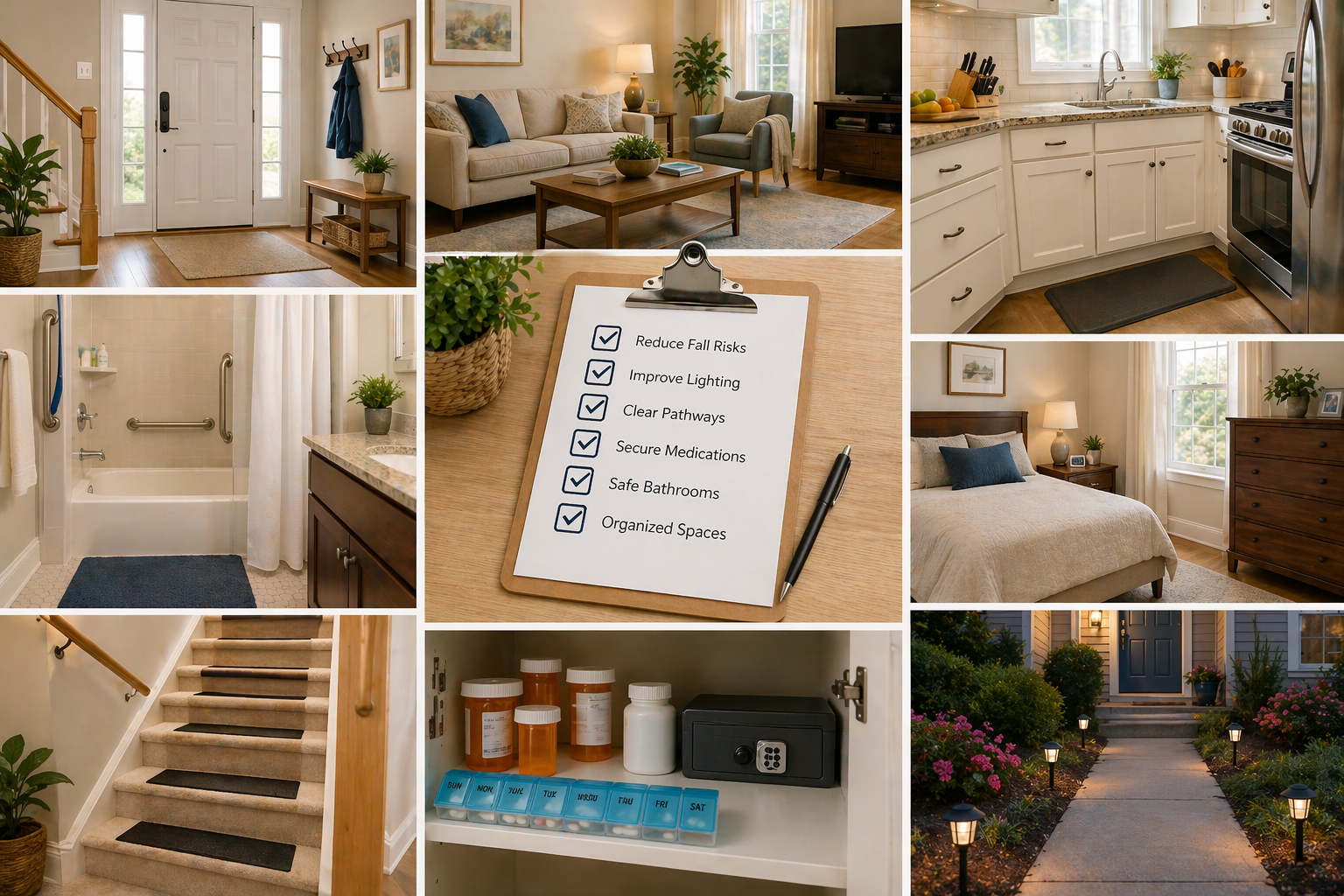
Dementia Home Safety Checklist: A Room-by-Room Guide for Family Caregivers
published: 2026-04-17
Resources
List of Services
-
Dementia Home Safety: Signs a Parent May No Longer Be Safe at Home A practical guide to recognizing when aging at home becomes unsafe. Learn how to track warning signs, distinguish normal forgetfulness from real risk, and take simple steps to protect your loved one’s safety and independence.Dementia Home Safety: Signs a Parent May No Longer Be Safe at Home
-
Dementia Home Safety Checklist: A Room-by-Room Guide for Family Caregivers A practical room-by-room dementia home safety checklist for family caregivers, with early warning signs, top hazards, quick fixes, and triage steps to help protect a loved one at home.Dementia Home Safety Checklist: A Room-by-Room Guide for Family Caregivers
-
Living Alone With Early-Stage Dementia: What Families Should Watch Closely A practical guide for families monitoring a loved one living alone with early-stage dementia, with clear signs to track, one-week spot-check methods, and next steps for protecting safety without undermining independence.Living Alone With Early-Stage Dementia: What Families Should Watch Closely
-
Wandering at Home: Early Signs to Recognize and Practical Safety Strategies for Families A practical guide for families to recognize early wandering signs at home, reduce risk with simple safety changes, and know when to seek added support before a crisis occurs.Wandering at Home: Early Signs to Recognize and Practical Safety Strategies for Families
-
Bathroom Safety Checklist for Dementia and Alzheimer’s Caregivers A practical bathroom safety guide for dementia and Alzheimer’s caregivers, with affordable fixes, warning signs to watch for, and simple upgrades that reduce fall risk while preserving dignity and independence.Bathroom Safety Checklist for Dementia and Alzheimer’s Caregivers
Start with a calm, 15-minute safety sweep
When even small changes at home start to feel overwhelming, begin simply. Set aside 15 minutes, today or this week, for a quick walk-through that helps you spot and steady the basics before they become bigger problems.
- Take a brief look at floors and pathways for clutter, loose rugs, and slick spots.
- Confirm that safety features, like grab bars, are present and firmly secured.
- Check that added lighting or night lights are working and haven’t been moved.
Invite your loved one into the process in a respectful way. Treat it as a shared comfort check, not a critique. Simple questions such as “Do you feel safe moving around here?” open the door to collaboration and reduce resistance to small adjustments.
Why this checklist works: clarity over panic
Noticing a door left unlocked, clutter forming in new places, or everyday items going missing can stir quiet worry. On their own, these signs may seem small. Together, they suggest it’s time for a more systematic look. A room-by-room review turns everyday observations into a prioritized plan so you know what to do now, what to schedule this week, and what to plan for later, without alarm.
Caregivers consistently report that a structured approach lowers anxiety by pinpointing specific, low-cost fixes and simple habit shifts. Focusing on high-use spaces, like entryways, kitchens, and bathrooms, demonstrates how small changes today can prevent larger issues tomorrow. This method offers timely guidance for families navigating busy schedules and aligns with early, manageable, and affordable home safety solutions.
Throughout the checklist, you’ll see triage cues, Urgent, Important, Optional, to help you sequence tasks at a steady, sustainable pace.
Entryways and Hallways
Early-warning signs: Cluttered floors, uneven surfaces, or poor lighting that may increase slips and falls.
Top hazards: Loose rugs, unsecured doormats, and obstacles blocking clear pathways.
Quick fixes:
- Remove clutter and secure mats with non-slip tape.
- Improve lighting, especially in the early evening.
- Install handrails where needed.
Small habit shifts: Encourage regular tidying and mark clear walking routes.
Triage:
- Urgent: Address tripping hazards immediately if falls are a high risk.
- Important: Schedule minor repairs within the week.
- Optional: Tackle décor changes later if they don’t affect safety.
Living Room
Early-warning signs: Misplaced items, confusion, or subtle furniture shifts that create awkward spaces.
Top hazards: Overcrowded seating, loose electrical cords, and obstructed walkways.
Quick fixes:
- Rearrange furniture to create open paths to seats and exits.
- Secure cords with cable organizers.
- Keep frequently used items within easy reach.
Small habit shifts: Discuss simple, agreed-upon rearrangements so changes feel collaborative.
Triage:
- Urgent: Clear obstructions if there’s an immediate fall risk.
- Important: De-clutter and secure cords within a week.
- Optional: Consider longer-term furniture adjustments over the next month.
Kitchen
Early-warning signs: Forgetfulness around appliances or confusion about where items are stored.
Top hazards: Exposed sharp utensils, slippery floors, and cleaning supplies stored unsafely.
Quick fixes:
- Secure knives and other sharp objects in locked or latched drawers.
- Place non-slip mats where floors get wet.
- Move cleaning products out of reach or into locked cabinets.
Small habit shifts: Build a routine for checking that floors are dry and safety features are in place.
Triage:
- Urgent: Address unsecured sharp items immediately.
- Important: Rework storage within the week.
- Optional: Optimize the kitchen layout later with a fuller review.
Bathroom
Early-warning signs: Trouble balancing on smooth surfaces or managing personal items.
Top hazards: Slippery floors, unstable grab bars, and cluttered counters.
Quick fixes:
- Apply non-slip treatments and use non-slip bath mats.
- Install grab bars around tubs and showers or check that existing bars are secure.
- Keep counters clear of unneeded items.
Small habit shifts: Use simple daily checklists to keep surfaces tidy and safety items maintained.
Triage:
- Urgent: Put non-slip measures in place and secure grab bars within 24–72 hours if fall risk is high.
- Important: Organize and declutter within the week.
- Optional: Plan additional modifications over the month as needed.
Bedroom
Early-warning signs: Difficulty managing personal items that leads to clutter or unsteady footing.
Top hazards: Slippery floor areas and cluttered surfaces.
Quick fixes:
- Apply non-slip treatments to flooring.
- Keep bedside tables and dressers clear of excess items.
Small habit shifts: Encourage a brief nightly tidy-up using a simple checklist.
Triage:
- Urgent: Address any obvious slip risks promptly.
- Important: Schedule decluttering within the week.
- Optional: Consider additional changes over the coming month.
Stairs and Landings
Early-warning signs: Uneven steps or minimal handrail support.
Top hazards: Worn treads, poor lighting, and inadequate railings.
Quick fixes:
- Maintain steps, add non-slip treads, and install or repair handrails.
- Improve lighting at top and bottom landings.
Small habit shifts: Create a routine to check rails, lighting, and step edges regularly; bring in maintenance help if this becomes overwhelming.
Triage:
- Urgent: Address stair risks immediately.
- Important: Plan minor fixes within the week.
- Optional: Schedule larger updates as part of a broader plan.
Medication and Valuables
Early-warning signs: Disorganized storage that leads to misplaced or mixed-up items.
Top hazards: Unsecured medications and important items that can be easily lost.
Quick fixes:
- Store medications in a clearly labeled, secure location so only appropriate items are accessible.
Small habit shifts: Add a quick daily check for correct placement and labeling; simplify what’s kept in reach.
Triage:
- Urgent: Secure medications right away if misplacement is a risk.
- Important: Reorganize storage this week.
- Optional: Revisit your setup next month for further streamlining.
Outdoor Areas
Early-warning signs: Poor lighting, obstructed paths, or walkways in disrepair.
Top hazards: Overgrown shrubs, broken steps, and dark entryways.
Quick fixes:
- Trim landscaping, repair steps, and add brighter lighting.
Small habit shifts: Build in seasonal checks and consider professional yard or repair help if upkeep becomes too much.
Triage:
- Important: Handle exterior repairs within the week and make decluttering an ongoing task.
- Optional: Schedule larger projects as part of a bigger home plan.
Red flags: when to bring in help
Many adjustments are simple and inexpensive, but certain patterns call for professional review. Watch for:
- Frequent falls or near-misses despite preventive steps.
- Increasing disorientation or behaviors that significantly change the risk level in a room.
- Ongoing difficulty maintaining safer setups even after adjustments.
In these situations, consider a professional home safety assessment. A clear cue is when your checklist evolves into a prioritized action plan with multiple urgent fixes or notable departures from the norm. Research suggests that early professional attention can improve safety outcomes and may reduce longer-term risks and potential hospital visits.
Data and insights
- Rising home safety concerns: Research indicates that as cognitive challenges emerge, caregivers report a notable increase in home safety issues, often observing that more than 25% of families experience heightened hazards within the first year of symptom onset. This trend emphasizes the urgency for a structured, room-by-room safety evaluation.
- Proven impact of low-cost interventions: Industry benchmarks suggest that simple adjustments such as installing non-slip mats, improving lighting, and securing loose flooring can reduce fall-related incidents dramatically. These low-cost fixes not only enhance physical safety but also alleviate caregiver anxiety by transforming everyday hazards into manageable tasks.
Together, these findings support a practical checklist approach: modest, systematic changes can significantly reduce risk while building caregiver confidence.
Expert perspective
Drawing on years of caregiving support and home safety assessments, I’ve seen that minor daily adjustments often prevent larger problems. A room-by-room approach translates everyday observations into a clear, prioritized plan, so urgent issues get attention first while less critical items are scheduled appropriately. Addressing seemingly small hazards tends to boost confidence and ease anxiety. The goal is clarity over panic, enabling families to move methodically rather than reactively, and underscoring how a structured, affordable assessment can be a game changer for home safety management.
What to remember
- Small, everyday changes inside the home can be meaningful early signals. This guide validates those observations and organizes them into a room-by-room plan.
- The walkthrough covers entryways, living spaces, kitchens, bathrooms, bedrooms, stairs, medication and valuables, and outdoor areas with concrete steps like decluttering, better lighting, and secure storage.
- Triage labels help you prioritize so urgent hazards are handled right away, while less critical tasks are scheduled.
- A brief 15-minute routine keeps safety on track without overwhelming your schedule and encourages collaboration with your loved one.
- Data and expert experience affirm that early, systematic adjustments reduce risk and build peace of mind.
Take the next step
If this checklist is helpful and you’d like added support, download our printable home safety checklist and book a free 15-minute safety triage call. Before They Forget is here with clear, practical guidance so you can move forward with confidence and keep your loved one safe at home, calmly and step by step.