Bathroom Safety Checklist for Dementia and Alzheimer’s Caregivers
published: 2026-04-20
Resources
List of Services
-
Dementia Home Safety: Signs a Parent May No Longer Be Safe at Home A practical guide to recognizing when aging at home becomes unsafe. Learn how to track warning signs, distinguish normal forgetfulness from real risk, and take simple steps to protect your loved one’s safety and independence.Dementia Home Safety: Signs a Parent May No Longer Be Safe at Home
-
Dementia Home Safety Checklist: A Room-by-Room Guide for Family Caregivers A practical room-by-room dementia home safety checklist for family caregivers, with early warning signs, top hazards, quick fixes, and triage steps to help protect a loved one at home.Dementia Home Safety Checklist: A Room-by-Room Guide for Family Caregivers
-
Living Alone With Early-Stage Dementia: What Families Should Watch Closely A practical guide for families monitoring a loved one living alone with early-stage dementia, with clear signs to track, one-week spot-check methods, and next steps for protecting safety without undermining independence.Living Alone With Early-Stage Dementia: What Families Should Watch Closely
-
Wandering at Home: Early Signs to Recognize and Practical Safety Strategies for Families A practical guide for families to recognize early wandering signs at home, reduce risk with simple safety changes, and know when to seek added support before a crisis occurs.Wandering at Home: Early Signs to Recognize and Practical Safety Strategies for Families
-
Bathroom Safety Checklist for Dementia and Alzheimer’s Caregivers A practical bathroom safety guide for dementia and Alzheimer’s caregivers, with affordable fixes, warning signs to watch for, and simple upgrades that reduce fall risk while preserving dignity and independence.Bathroom Safety Checklist for Dementia and Alzheimer’s Caregivers
Start here: fixes you can make today
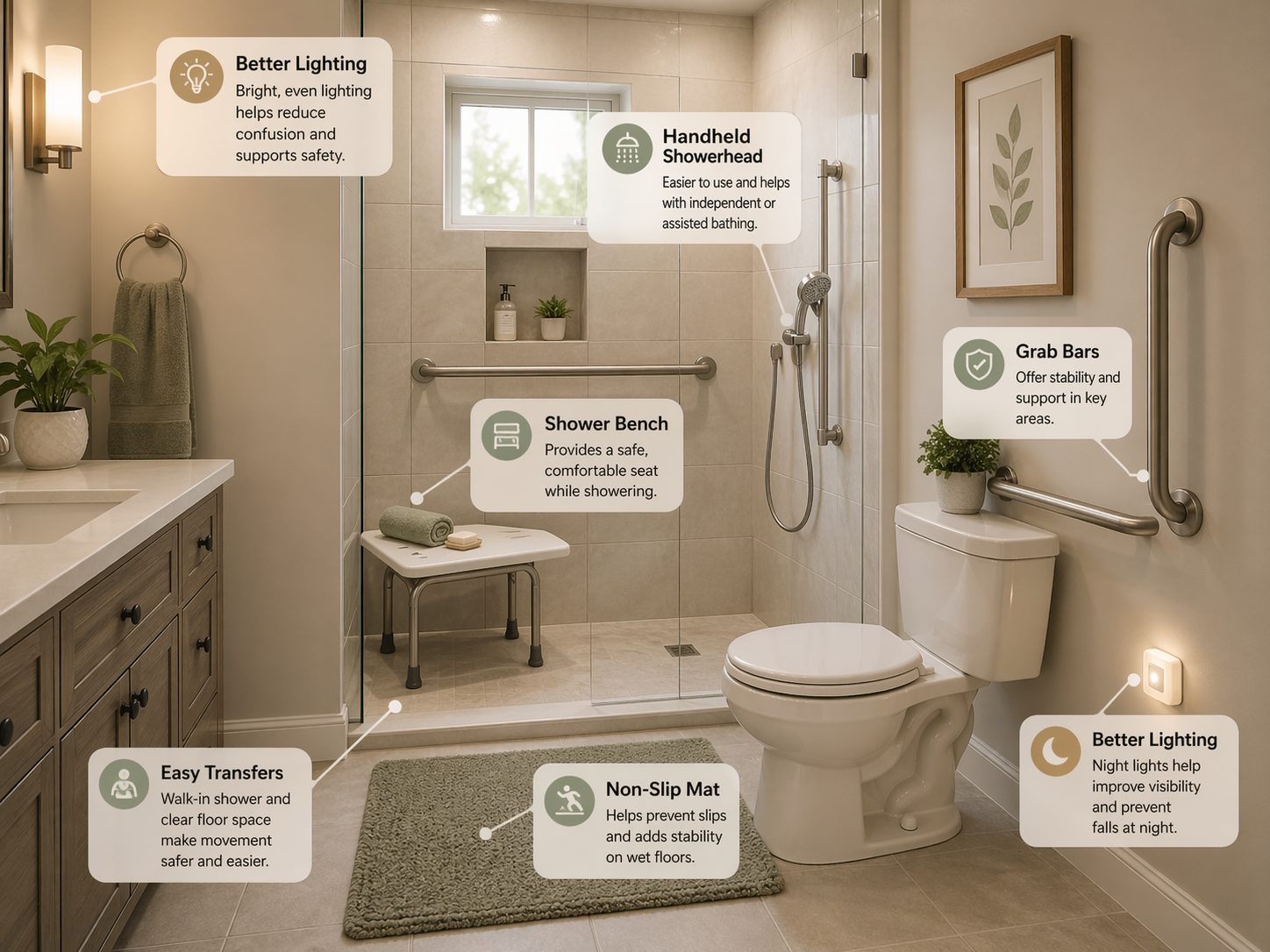
If you only change a few things before the next bath or nighttime bathroom trip, make them these. They’re affordable, fast, and preserve dignity while reducing risk for a spouse or parent living with memory changes:
- Non-slip flooring and mats: Replace slick surfaces with non-slip mats or use an anti-slip spray. Estimated cost: $10–$30 per mat or spray-on treatment; a quick fix that dramatically reduces fall risk.
- Lighting you don’t have to think about: Upgrade to motion-activated or thermostatic lighting to improve visibility during nighttime bathroom visits. Use contrast, for example, darker floors against lighter walls, to help cue safe pathways.
- Handheld showerheads: Swap a fixed showerhead for a handheld model to allow safer, more controlled bathing. Estimated disruption remains low while offering increased flexibility.
Why bathrooms quietly become high-risk
What used to be routine, stepping into the tub, reaching for a towel, finding the light switch, can turn dangerous when a bathroom isn’t adapted for cognitive and mobility changes. Slippery surfaces, dim or inconsistent lighting, and sequence-dependent tasks, stand, turn, step, balance, compound the risk. Privacy concerns and resistance to bathing can increase hesitation, too. A room-by-room safety assessment often reveals small adjustments that lower fall risk and help you intervene safely without taking over.
How memory and movement changes show up in the bathroom
Memory lapses can interrupt the steps required to use the bathroom safely. Executive dysfunction can make sequencing hard, someone might bypass a crucial step like securing a grip on a grab bar. Slower gait and reduced balance make negotiating corners or rising from the toilet more difficult. In low light, delays in sensory processing can turn a simple reach for a switch into a misstep and a fall. Resistance to bathing often stems from fear of losing independence or privacy. The aim is to layer in safety enhancements that accommodate both cognitive and physical changes while preserving autonomy and dignity.
Prioritized environmental adjustments (with cost and disruption notes)
Use this checklist to make high-impact, low-disruption changes first:
1) Stability where it matters
- Grab bars and handrails: Install near the toilet and in the shower or tub. Estimated cost: $20–$50 per bar; typically low disruption when professionally installed.
2) Safer surfaces underfoot
- Non-slip flooring and mats: Replace slick surfaces or apply anti-slip coatings. Estimated cost: $10–$30 per mat or spray treatment; fast to implement.
3) Easier transfers and bathing
- Raised toilet seats and shower benches: A raised seat eases the sit-to-stand transition; a shower bench adds stability while bathing. Estimated cost: $25–$75; installation usually requires minimal adjustments.
4) See the space clearly
- Improved lighting solutions: Upgrade to motion-activated or thermostatic lighting to enhance visibility during nighttime bathroom visits. Increase contrast, for example, darker floors against lighter walls, to cue safe pathways.
5) More control in the shower
- Handheld showerheads: Replace fixed models to allow safer, more controlled bathing. Estimated disruption remains low while offering increased flexibility.
Together, these adjustments offer an affordable, practical way to make the bathroom safer, without undermining dignity or independence.
What to watch for—and what to say
Everyday signals often point to hidden hazards before an incident occurs. Observe for:
- Reluctance to enter the bathroom or increased anxiety before showering.
- Hesitation or extra effort when moving from sitting to standing.
- Verbal or non-verbal uncertainty about how to use fixtures.
Use calm, respectful language when offering help. For example: “I noticed the shower looks a bit slippery today. Let me help set it up so it’s safer for you.” This acknowledges autonomy while making support feel natural. Pair these observations with routine, low-key checks so small adjustments happen before risks escalate.
When to bring in professionals
- Occupational therapy assessment: If basic movements are repeatedly difficult or mobility is steadily declining, seek an OT evaluation for tailored recommendations.
- Plumbing or fixture support: Persistent issues with water temperature, uneven water pressure, or malfunctioning fixtures call for a professional inspection so maintenance doesn’t compromise safety.
- Medical guidance: Sudden shifts in cognition or coordination may signal underlying health issues; consult a healthcare provider promptly.
Blending your day-to-day observations with professional input creates a comprehensive safety plan, immediate fixes now, a clear path for escalation later.
What the numbers and experience suggest
Data and insights
- Increased fall risk: Industry benchmarks suggest people with cognitive impairments face a significantly higher risk of bathroom-related falls. This underscores the value of immediate changes like non-slip surfaces and grab bars.
- Impact of environmental adjustments: Research shows targeted upgrades, better lighting, improved fixtures, reduce fall incidents. In controlled studies with aging populations, low-disruption fixes correlate with fewer emergency room visits.
- Cost-effectiveness and early action: Preliminary analytics from home safety assessments indicate that affordable, preventive modifications can lower long-term healthcare costs. Organizations report that simple changes provide immediate benefits and can help delay mobility-related decline.
Expert perspective
Seasoned practitioners in senior care and home safety consistently find the bathroom uniquely challenging because it pairs high-risk physical tasks with the complexities of dementia care. Small upgrades, well-placed grab bars, non-slip surfaces, meaningfully reduce fall risk while preserving a sense of independence. The most effective approach isn’t one-size-fits-all; it recognizes the interplay between cognitive decline and physical vulnerability. Prioritizing clear, dignified, minimally disruptive steps delivers safety and peace of mind for families.
Build a plan you can maintain
Safety is not just a checklist, it’s an ongoing, respectful routine. Combine practical modifications, grab bars, non-slip flooring, enhanced lighting, with supportive communication and, when needed, professional assessments. Each small change contributes to a safer, more predictable bathroom, lowering fall risk and supporting independence. This aligns with the growing demand for dementia-friendly home adjustments that create fewer crises and more confidence for caregivers.
At Before They Forget, we believe clarity empowers families. With the prioritized steps above, designed for minimal disruption, you can quickly turn a high-risk room into a safer, more dignified space for your loved one.
Take the next step
Download our free bathroom safety checklist to get clear, actionable guidance you can use today, and begin a short home-safety assessment to organize next steps. These simple tools help you make affordable, dignity-preserving upgrades now, and move forward with confidence.